Production Porsche Carburetor Chronology
The carburetors Porsche fitted to 356, 912, and early 911 engines — and how they evolved.
Early 1950s — Pre-A and Early A
Gmünd cars used carbs made by Huff, with a 26mm throat. We have restored only one set over the past 20 years — they are very scarce.
Stuttgart cars started using the Solex 32PBJ (also referred to as PBI) in 1950. In 1951 they added the super engine and the 40 single barrel carburetors for Carrera. The 32's had a 32mm throat, and a side-mounted cold start device (choke). They were used until 1954. Porsche produced several different engines at this time (1100cc, 1300cc, 1500cc) and the carburetors had various configurations of jetting and venturis dependent on the specific engine. The early 50's body was a 2-piece design with a cold start valve — both used on Normal engines.
In 1954, the 55 model year, Porsche switched to the Solex 32PBIC for Normal engines, and continued use of the 40's for super engines. The PBIC carburetor was close to the PBI in size and appearance, but had a one piece body, no cold start valve, and only one jet/venturi configuration. This body can be used in place of the PBJ with appropriate jetting and addition of the cold start device if PBJ carbs are not available.
The difference between a PBIC and PICB is the cold start valve opening — on the PICB style, a steel plate covers it.
1950–1954 — 40 Single Barrel for Super Engines
Through 1950–54, Porsche used Solex 40 single-barrel carburetors for its 528 Super engines; 40PBIC's and PICB's. They were set up with 2 versions, town and sport, with having a better idle and what we recommend for Concours 356's. Both carburetors had different jetting and venturis depending on the specific engine. These carburetors had the cold start device on the side of the carb.
When Porsche switched to the 616/2 engine they only used the 40PICB's without the cold start device. Jets and emulsion tubes were different from the 528 engines, and used the 29mm venturis as on the earlier sport version.
The 32 and 40 single barrel carbs were in use until 1957. When Porsche switched to the Zenith 32NDIX for Normal and Super engines — Zenith restoration is now handled by Nick Warriner.
Mid 1950s+ — Solex 40PII Sandcast (Carrera)
Throughout this period, Porsche also used Solex dual barrel carburetors in their Carrera engines, designated 40PII. They started with a short (4-bolt) and then a tall (5-bolt) Sandcast aluminum carburetor with different setups pending on type of engine. Later Carrera 2's used the pot metal type bodies with larger jets and venturis as used in the production 356's — they were used on the Carrera 2 type motors.
1959 onward — Solex 40PII-4 (S90 / SC / early 912)
In 1959, for the 1960 model year, Porsche introduced the S90 and once again began using the Solex carburetor. Now it was a dual barrel carburetor with 40mm throats, designated 40PII-4, and had a tall, thin breather tube. With a single shaft across both throats, it remained in use through the S90 series, the 356SC, to the 1967 912. During the transition from S90 to SC, there are at least 4 different variations of the breather tube, until the familiar short fat brass tube we know from the SC and 912 era carburetors. This was a grey pot metal cast carb with silver colored (white) cad plating for the hardware and an aluminum top.
Early Super 90 carbs had a tall, narrow breather tube. There were variations in the breather tubes until the wider, shorter ones used for the SC, until the end of the series. The short fat brass breather tube we see on the later SC's is also the same configuration used on the 912.
Very early Solex had a pot metal top, and that was changed to a cast aluminum top. The Solex was offered as a grey pot metal carb with white cad (silver) hardware. Later, the 912's (1967 model year) appeared with gold cad hardware.
1968 onward — Solex 40PII-4 Split Shaft (emissions)
To deal with the emissions controls being placed on vehicles, starting with the 68 model year, Porsche used the Solex 40PII-4 Split Shaft — a split shaft design with a vacuum distributor for better tuning, improved fuel combustion, and lower emissions. These later carburetors had Gold Cad plating for the hardware, and sometimes a Gold irridite coating on the pot metal cast body. Many owners replaced the vacuum distributor with a stock Bosch .022, and sealed off the vacuum ports on the carburetors. Both styles are in use.
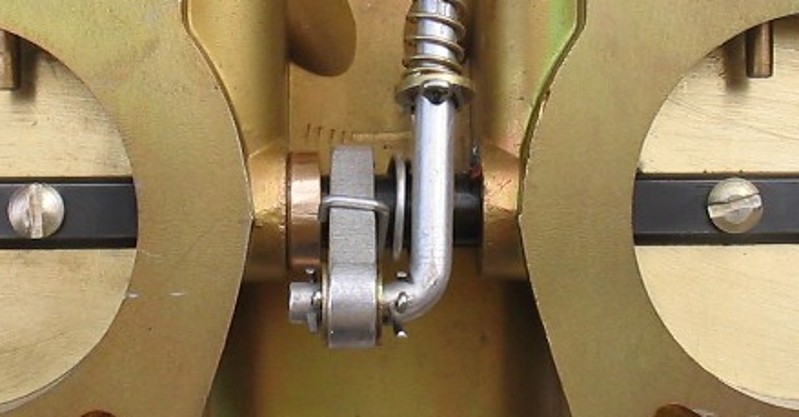
We offer only a solid shaft conversion for the split shaft carburetor. Conversion details are on our Solex page.
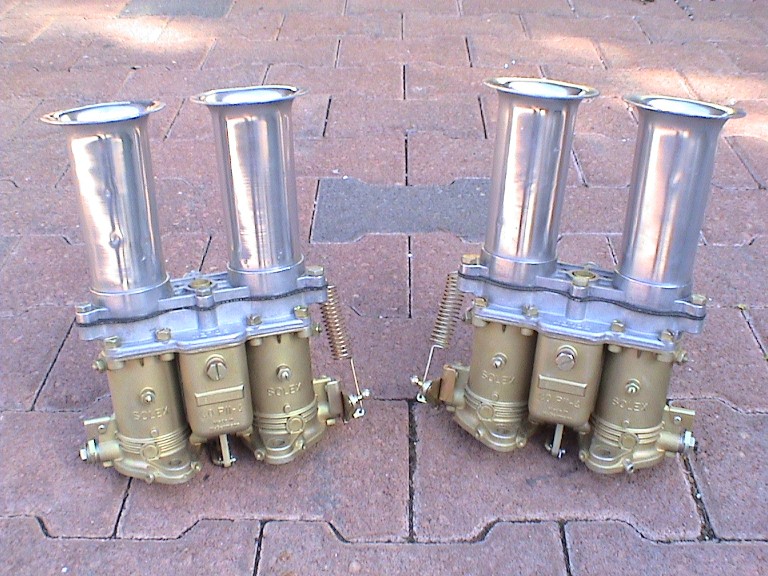
As a note, we don't recommend velocity stacks, but they sure look good! Especially on a set of 44mm Solexes!
Carburetor Specifications
Carburetor Specifications
356 Carburetor Rescue offers remanufacture of all the following:
Early Porsche 356 engines used Solex carburetors.
32 PBJ, and more commonly, 32PBIC / PICB on Normal engines, and the 40PBIC/PICB on Super engines. (the difference between a PBIC and PICB is the presence of a starter jet set up on those earlier PBIC carbs, deleted in 1955) These are all single barrel carburetors.
Solex 40PII, sandcast aluminum dual barrel carburetors, both short and tall, were used on Carrera, and Spyder 550 cars. Pot Metal 40PII-4 could also be set up as the "tall" Carrera carbs.
Think you can do your own carburetors? Each Zenith carburetor has 122 individual parts; 244 for the pair, while each Solex has 145 individual parts; 290 for the pair.
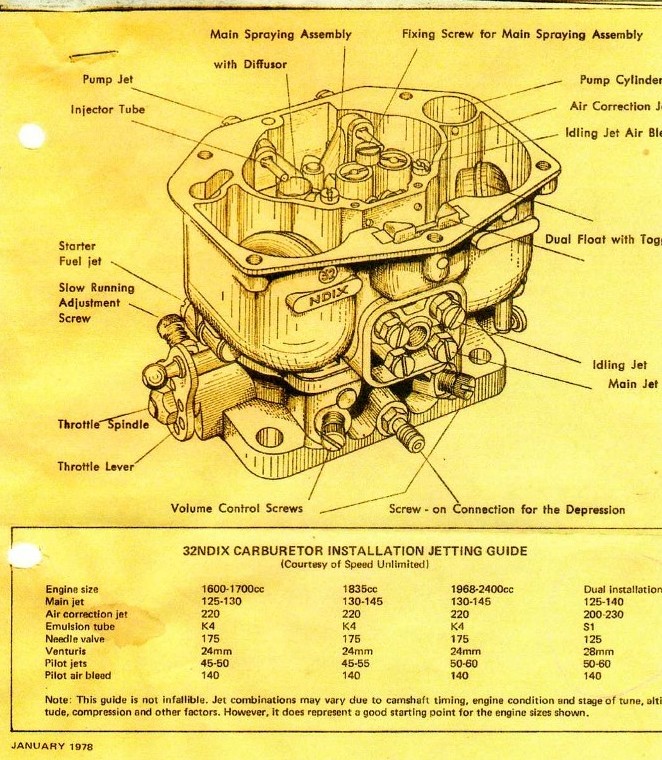
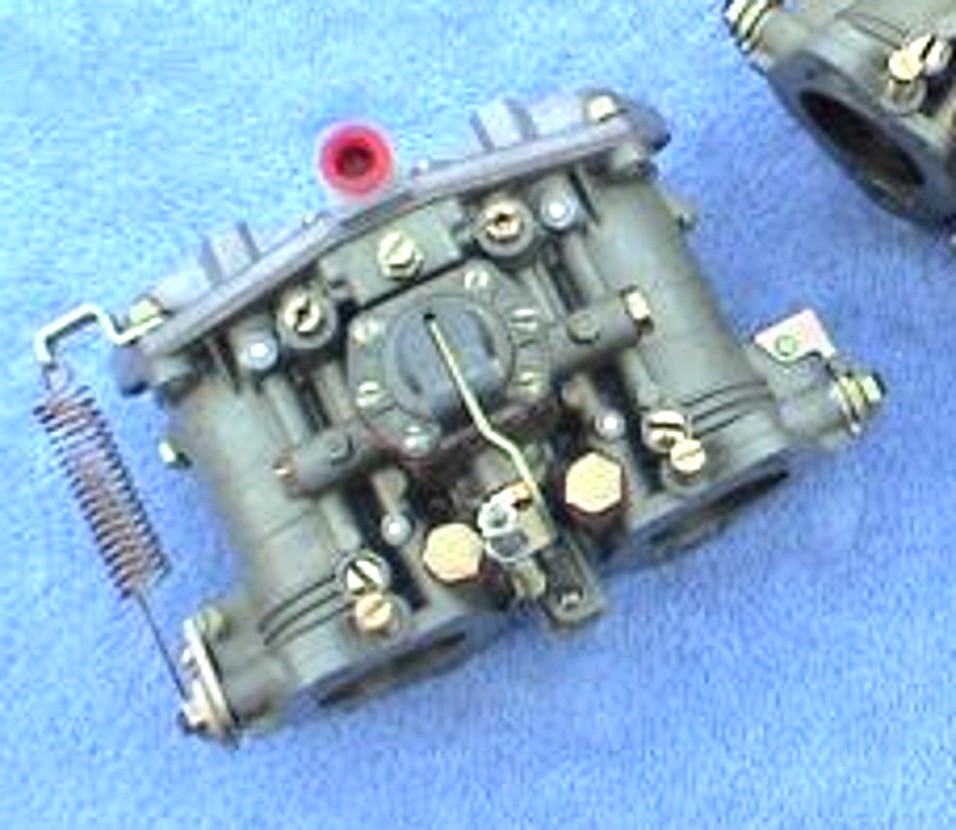
Zenith 32NDIX: VW specs for Zenith 32 NDIX here
Zenith dual barrel carburetors were introduced on the Porsche 356 engines in the late 1950's. The earliest we've seen is a Zenith body dated 9/57, which would have equated to the 1958 model year.
Zenith's were supplied as a grey pot-metal with white cad (silver) colored hardware. The use of gold colored hardware did not begin until after the end of the Porsche 356 production. They are popular for appearance, though, and are seen on 356's. This is a matter of personal preference. We supply our restorations with the white cad, but can supply the gold tone on request.
Zenith carburetors were dated by production year, and also bore the stamp of the particular model: Normal = PO3 L & R, Supers = PO2 L & R, C's =PO19 & PO19.1. PO10 carbs were intended for VW. There are later made carbs with different model numbers and serial numbers instead of dates. They are all 32 NDIX, and work with the 356, but are not original to the pre 1965 cars. Any body will work with any car, or even either side as long as hardware and jetting are correct.
Stock set up's as follows: N S C Main jets 115 130 130 main air correction jets 230 220 210 idle jet 50 50 55 idle air correction jet 120 140 140 pump jets 50 40 40 venturis 24mm 28mm 28mm venturs are also expressed as 32-24, 32-28
Look down the mouth of the carburetor to see air jet numbers as well as venturi numbers. Over the years changes have been made to jet set ups and venturi sizes, depending on availability of parts, some custom useage such as altitude, addition of a big bore kit, engine rebuild with change of Cam.
If you are considering switching from a Zenith to a Solex carburetor, remember the choice of carburetor is dependent on the Cam in your engine, not the installation of a "big bore kit'. Lower reving engines (4500 / 5500 rpm) - stock 1500 and 1600 engines as used by the A, B, and C cars - need to use Zeniths with their smaller 32mm bore. SC's and later cars, comfortably running to 6,000 rpm, can accomodate the 40mm bore of the Solex carburetors. Without the right cam, switching carburetors will not gain you any advantage.
Solex 40PII-4:
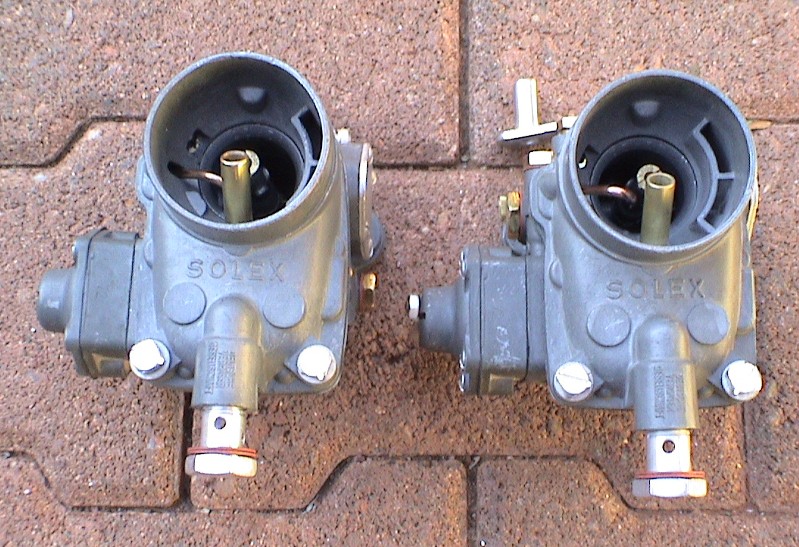
This dual barreled, single shaft, carburetor is used on Porsche 356 Super 90, SC's, and early 912 cars. Early Super 90 carbs had a tall, narrow breather tube. There are variations in the breather tubes until the wider, shorter ones used for the SC. There is a tubeless late S90 / early SC top correct for those models. The early SC carb also has S90 injectors. The short fat brass breather tube we see on the later SC's is also the same configuration used on the 912.
The Solex was offered as a grey pot metal carb with white cad (silver) colored hardware. Later, the 912's (1967 model year) appeared with gold cad colored hardware.
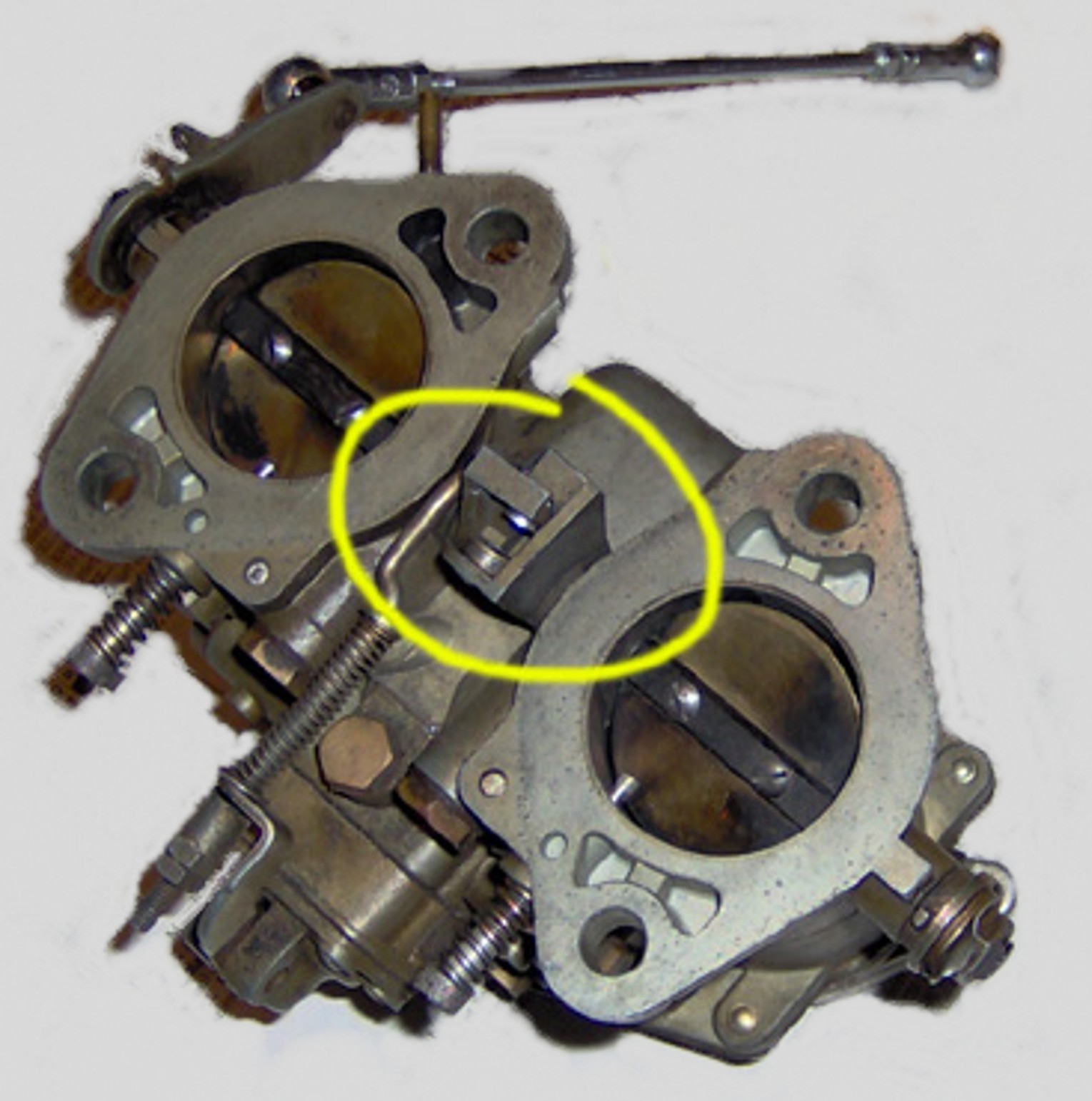
Beginning with 912 production in late 1967 (the 1968 model year), Porsche began using the 40PII-4 Split Shaft carburetor. This was offered with a gold irridite plating and gold colored hardware. These also were designed for the stock Vacuum Advance distributors used in these models. Many owners replaced the vacuum advance with a stock.022. When this was done, the vacuum tubes on the carbs had to be sealed off. Both styles are in use.
Very early Solex had a pot metal top, and that was changed to a cast aluminum top. See photo below of gold toned carbs with aluminum tops and velocity stacks.
Stock jet set ups are as follows: Solid Shaft Split Shaft main jets 115 122.5 / 125 main air correction jets 180 180 idle jets 57.5 55 idle air correction jets 180 (1.8) 110 (1.1) injectors no # or 35 40 pump jets 50 40
Venturis on both are 32, often denoted as 40-32.
As with the Zenith, adaptations and changes have been made over the years.
We offer a solid shaft conversion for the split shaft carburetor, more information here.
As a note, we don't recommend velocity stacks, but they sure look good! Especially on this set of 44mm Solexes!
Zenith carburetors
Solex Solid Shaft
Solex Split shaft
Conversion carburetors: note shaft bushings that are not on standard solid shaft carburetors as well as throttle link set up. All other hardware is standard to the split shaft.
Solex 32PCIB
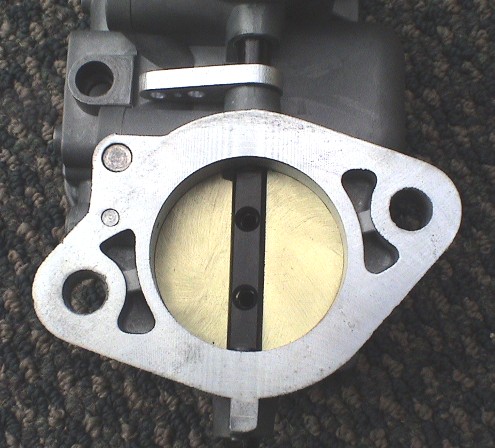
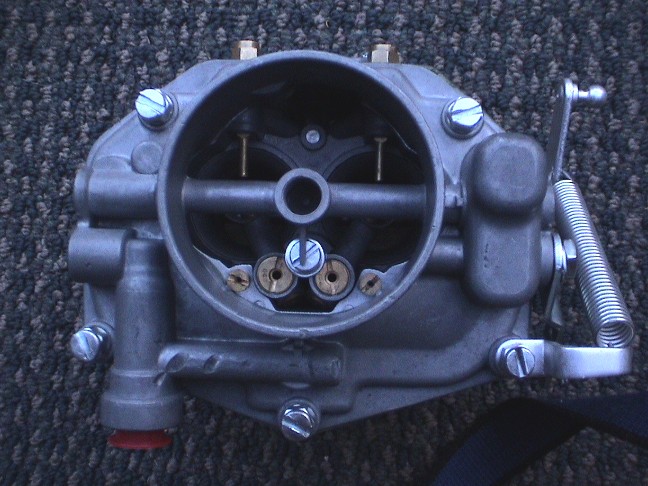
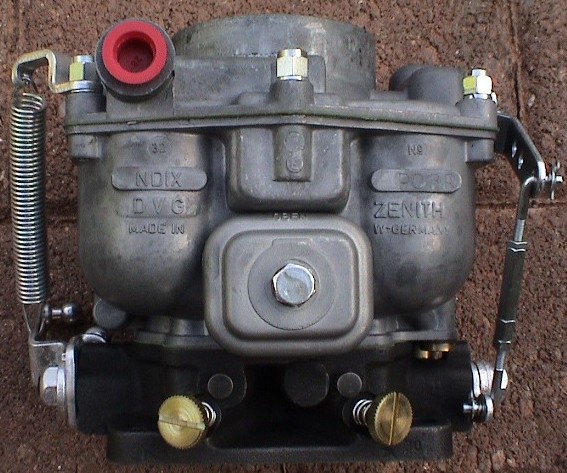
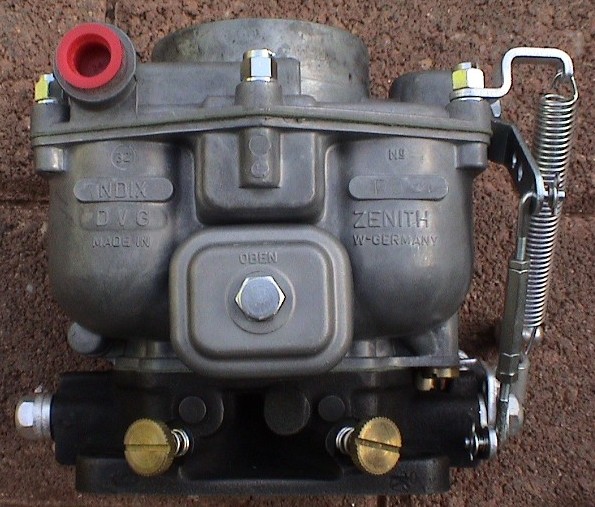
Zenith 32NDIX Stock Set Up
| Jet / part | N | S | C |
|---|---|---|---|
| Main jets | 115 | 130 | 130 |
| main air correction jets | 230 | 220 | 210 |
| idle jet | 50 | 50 | 55 |
| idle air correction jet | 120 | 140 | 140 |
| pump jets | 50 | 40 | 40 |
| venturis | 24mm | 28mm | 28mm |
Source wording: venturs are also expressed as 32-24, 32-28.
32 NDIX Specs For VW
32 NDIX specs for VW
This is old information, but still absolutely viable. Because of the differences with modern fuels, you may have to make some experiments to get float levels and injection right. Remember these specs are only guidelines. The 1968-2400cc engine capacity is actually pushing the limits of the Zenith. You might want to consider going to dual carburetor if considering an engine that big.
There are many other variations to be considered, like camshaft timing, altitude, overall engine condition. Look at these settings as being guidelines, a starting point. Remember, at idle, all engines tend to run rich. Keep your spark plugs clean so you can read and maintain your engine performance.