Carburetor Maintenance And Injection Measurement Vial
Carburetor maintenance and injection measurement vial reference.
Carburetor Maintenance And Injection Measurement Vial
Carburetor maintenance and Injection measurement vial
If you have recently purchased a set of restored/remanufactured carburetors, injection and float levels are set. The throats have been synchronized for air flow. So why do you need to do maintenance? If you have an older set of carburetors, have you been keeping up with your routine maintenance, also called a "rebuild"?
All mechanical parts, including carburetors, need maintenance. Eventually you will have driven 10,000, 25,000, or more miles. Even if you don't put a lot of miles on your engine every year, shafts, springs, etc should be checked for wear, lubrication of moving parts. If you leave gasoline sitting in your carbs for long periods of time, the gunk it leaves behind as it evaporates will clog jets, cause your floats to stick, gum up moving parts, and seal off the smaller passageways in the carbs. It will also degrade seals and gaskets. on the other hand, carbs run dry and left for long periods of time will see the gaskets and seals dry out and crack. Leaking seals can mean gasoline leaking into your engine. leaking gasoline eventually resolves itself - as FIRE! Periodically, get a rebuild kit and replace those parts. The original shop manuals, and many after- market manuals, offer details on carburetor maintenance. You can also refer to our manual pages if you don't have your own. Zenith Solex
If you are wondering about your carburetor's performance, give us a call
Carburetor maintenance requires a few specific tools: The short stubby slotted screwdriver for adjusting jets, various screws, even making it easier to move some of the volume control screws. The Unisyn or (preferably) the Synchrometer The float guage An injection measurement vial
The screwdriver is an easy item to obtain, whether you prefer the one from the original tool kit, or what ever you picked up at the hardware store
The Unisyn is a bit more difficult to use and find, which is why the Synchrometer is peferred, being easier to use and most definately easier to obtain. Usually, the base has to be adjusted for a tight fit in your particular carburetor; some electrical or duct tape works well for this. Your restored carbs have already been synchronized, but it is something you will want to monitor over time, especially after rebuilds, etc.
The float guage has become an NLA item for Zenith. Sometimes you can find a P78 guage, the tool for Solex. We set the float levels on our restored carbs, and its unlikely that you will have to do much here until you get to your rebuild. Instructions for setting the floats manually can be found on this web site Zenith Solex
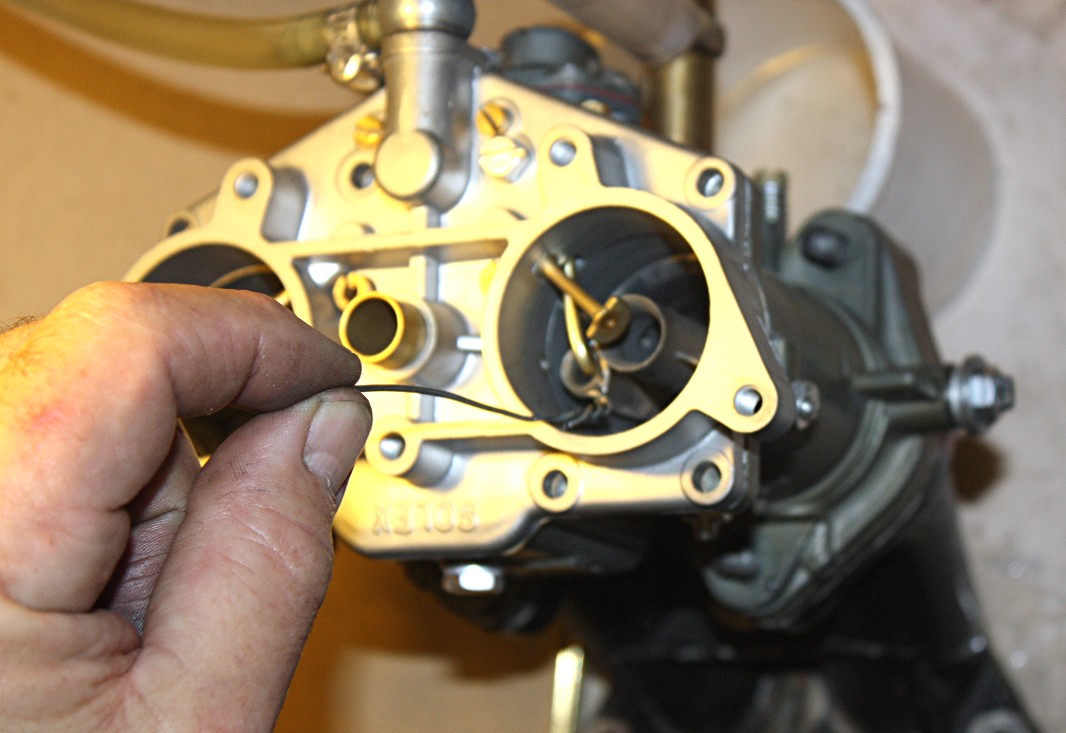
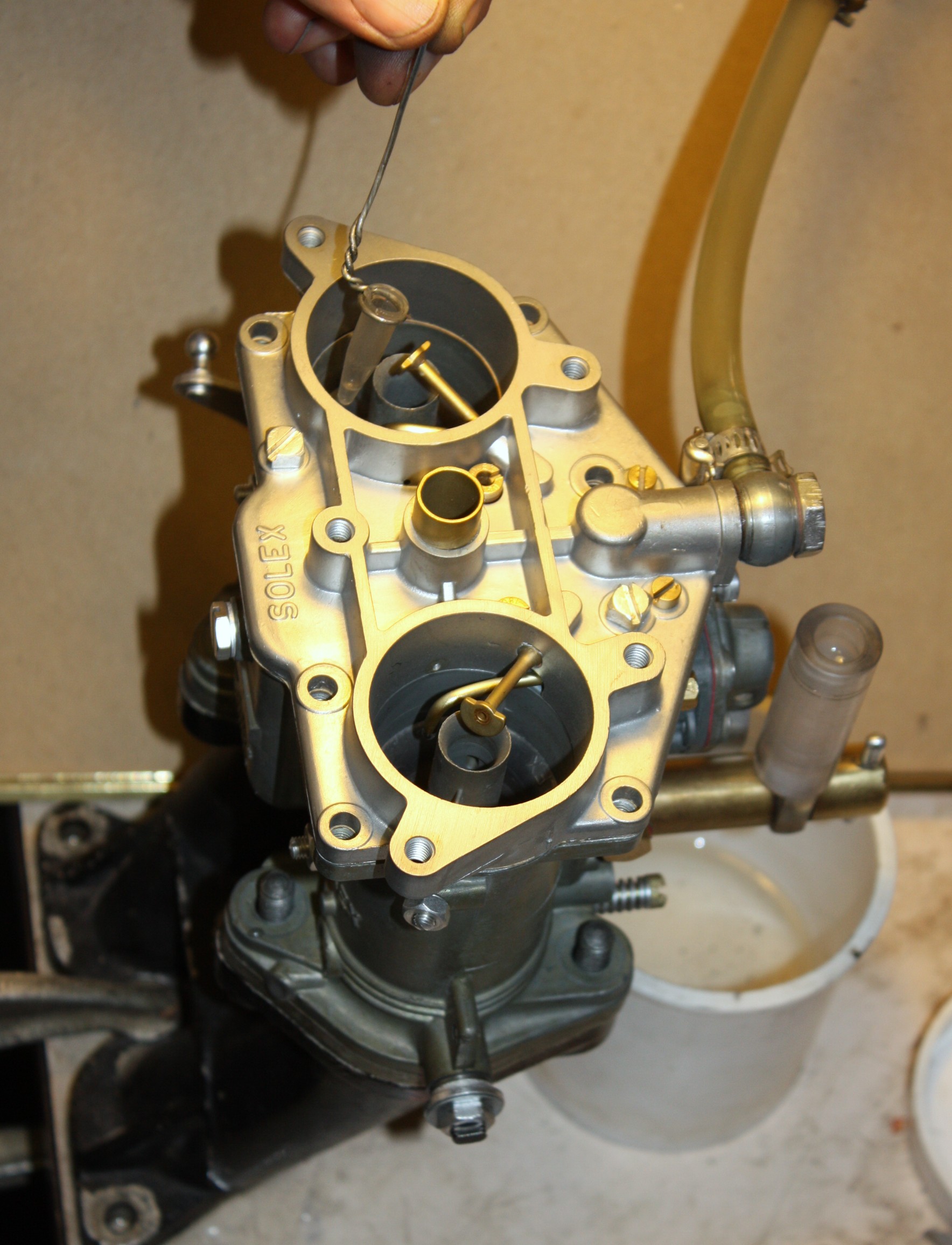
Injection measurement vials were originally glass, and came with a little bit of wire that allowed the vial to be dipped under the injector in the carb, These glass vials are difficult to find. We were fortunate enough to find some plastic vials in the correct size. Add a bit of wire and measure your injection.
These vials are too big for use with Normal Zenith (PO3) carburetors, but can be used with Super (PO2) and C (PO19) Zeniths, as well as all the Solex carbs.
Float guage
How to use the vials:
After attaching the wire, hold the vial under the injector and press the throttle lever twice, then read how much fuel is in the vial. If you are using the factory manual's guidelines, note that we have found the lower end of the original factory specs gives the best results with today's modern fuels. Those are the numbers noted here.
For Super and C Zeniths, 0.25ml shorten the pump link to increase the fuel lengthen the pump link to decrease the fuel
Solex 40PII-4, solid or split shaft, 0.35ml all Solex are adjusted the same way, by adjusting the two nuts on the end of the pump rod - moving them in to increase injection, moving them out to decrease injection
Solex 32PBIC/PBJ and 40PBIC/PICB, 0.5ml
Remember to call us if you have any questions!! 928-204-0507
More in Technical Resources
Parts Diagrams
Exploded parts views from the Porsche workshop manual.
Open pageSolex Workshop Manual
Workshop manual scans for the Solex fuel system pages.
Open pageDuane Spencer
Porsche 356 Performance Guide notes from Duane Spencer.
Open pageJack Staggs
Carburetor balancing and engine tuning notes from Jack Staggs.
Open page